8 years old
Houston, Texas
Warrior #229
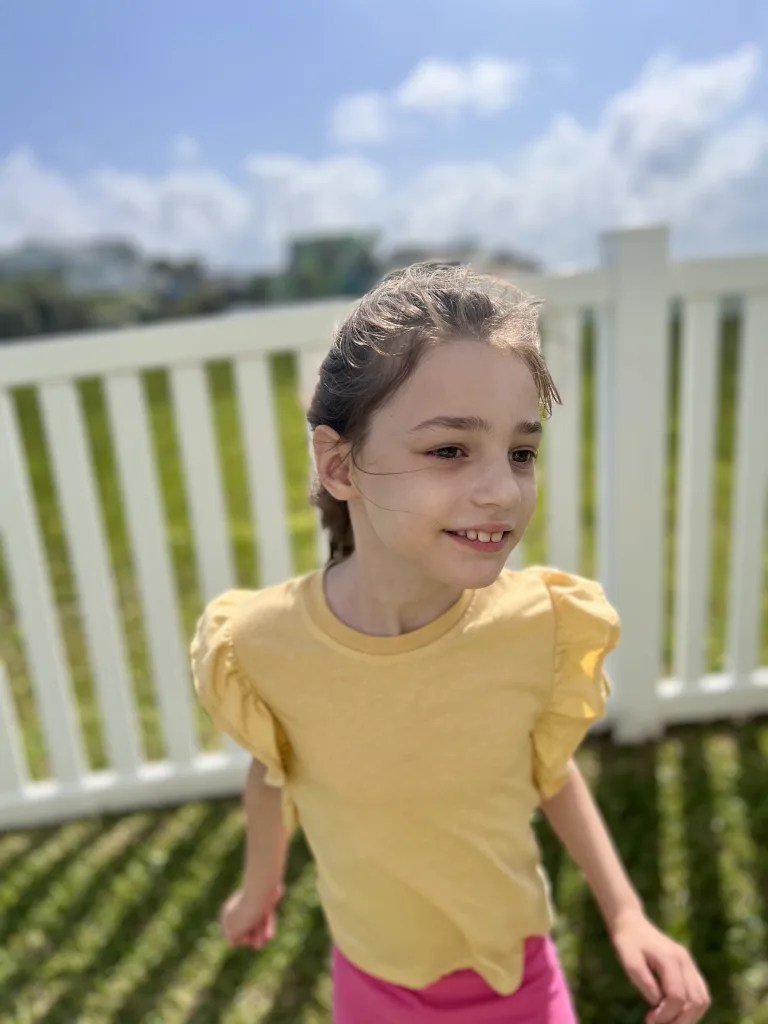
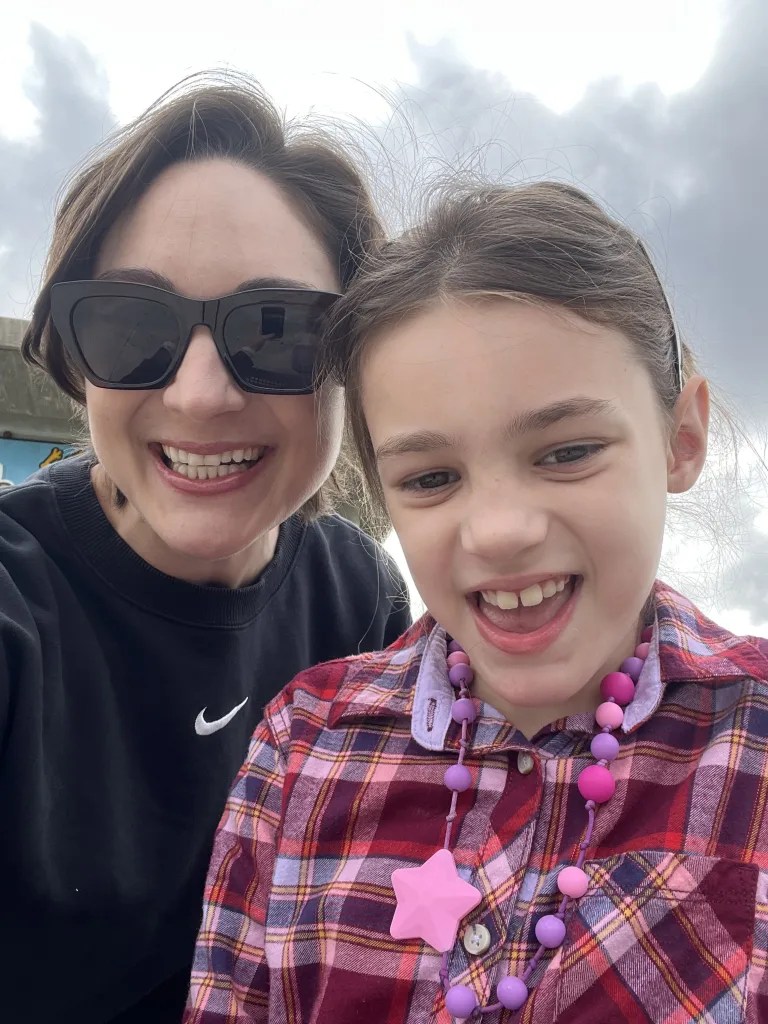
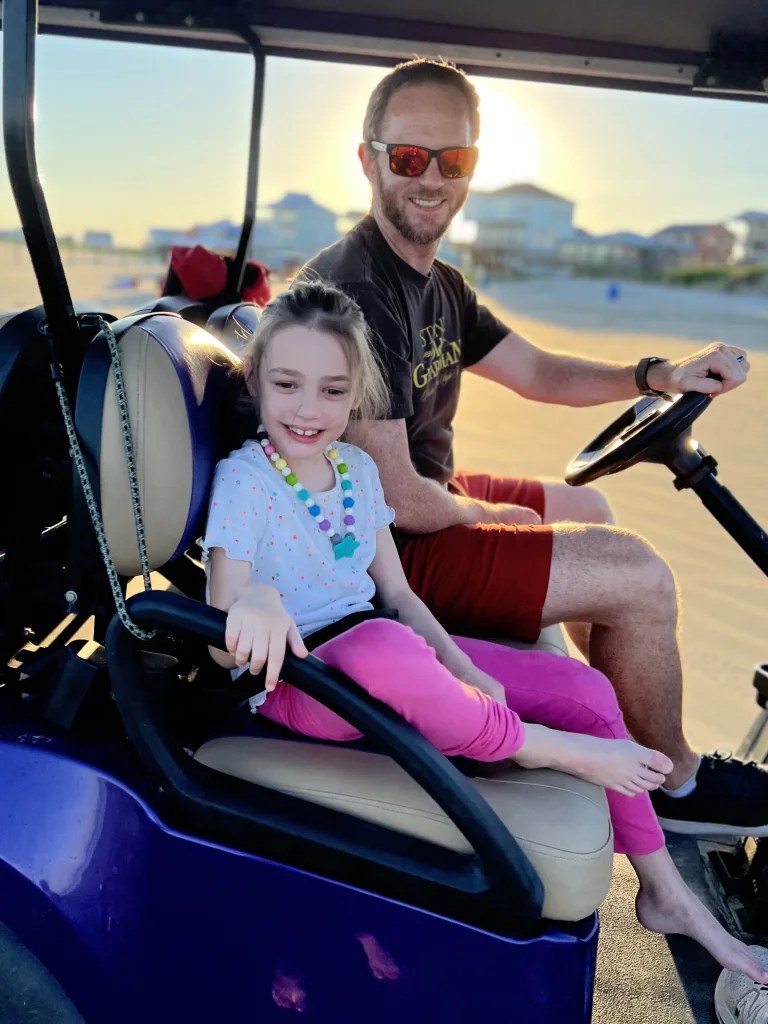
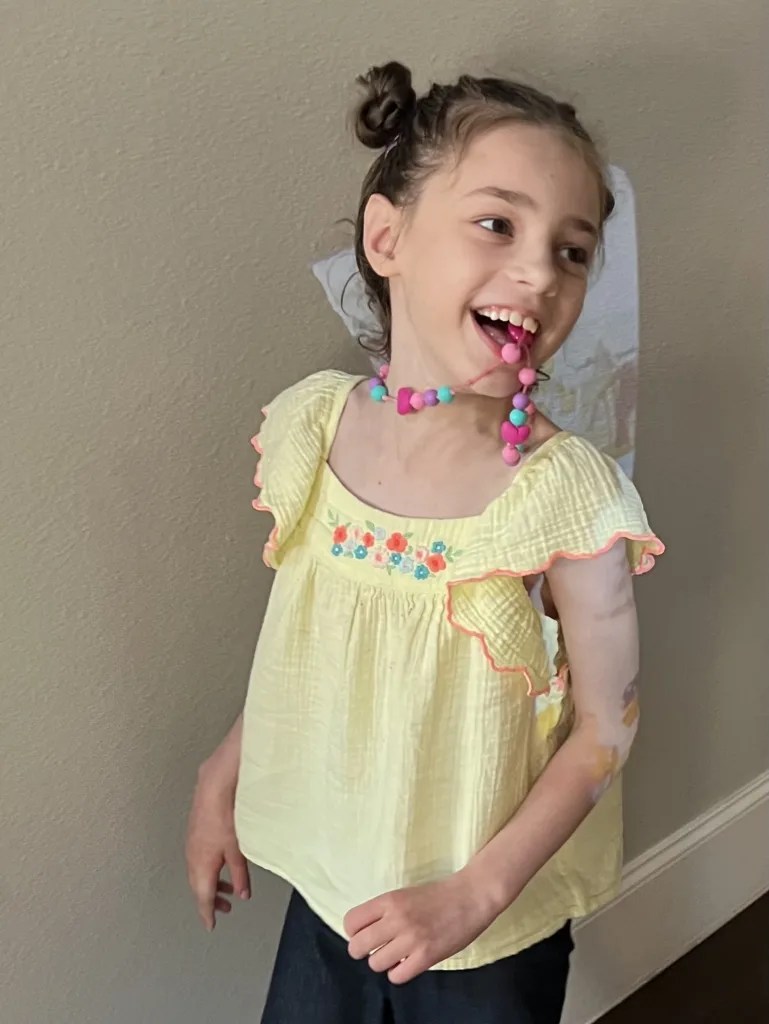
I may be biased, but I think my daughter Sloane has the world’s best laugh. It’s absolutely pure and joyous, and even when I don’t know why she’s laughing, it makes me smile too.
Sloane is 8 years old and my Syngap warrior. We received her diagnosis less than a year ago, but we knew from a very early age that she was different. When she was missing nearly all her milestones at 9 months old, her pediatrician told us to “wait and see.” Fortunately, we didn’t listen. She started early childhood intervention shortly after, including speech therapy, occupational therapy, and physical therapy. At 15 months, she was diagnosed with autism. By 18 months, she started ABA therapy.
We were very fortunate to get an early autism diagnosis and find professionals to support her. But there were always questions in the back of my mind: what caused her to have autism, and what does the future hold? There were no answers for years. A genetic panel for autism found nothing of note, and we were told to try again in five years as technology was changing rapidly.
In the meantime, Sloane had what we believe was her first tonic-clonic seizure shortly before she turned 3, while she was eating lunch at her ABA clinic. I’ll never forget seeing her strapped into a car seat in the back of an ambulance, dazed and exhausted. This seizure led to our ongoing epilepsy journey. We managed to get her mostly stable on one medication until she was seven years old, when it suddenly seemed to stop working. Her EEG was chaotic, and she was having severe seizures again. Her neurologist nudged us to do whole exome genetic testing to try to find the cause, and I’m so grateful we did.
Finally, at age 8, we received the diagnosis of SYNGAP1-Related Disorders. It was like a light bulb that illuminated the reason behind all her struggles. I wish I had known the diagnosis when she was 9 months old, when I was questioning myself as a parent and wondering if I was doing everything wrong. But better late than never! For our family, the diagnosis came with relief: we hadn’t done anything wrong. In fact, through our stutter steps, we had managed to do a lot of things that helped her grow. And, thrillingly, we learned that Syngap is being closely studied, with the eventual goal of clinical therapies. That knowledge gave me hope that I had never experienced before.
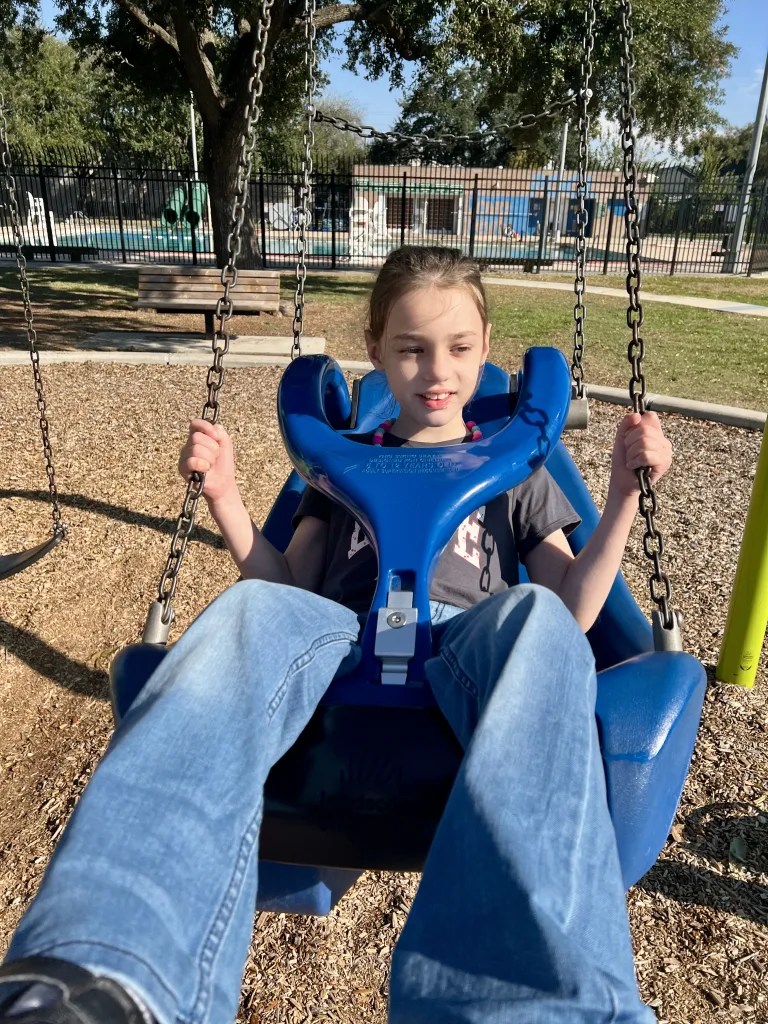
These days, Sloane’s seizures are present but slowly improving (we hope!) with a new combination of medications, guided by information about what has worked best for other kids with Syngap. She can make her voice heard with her AAC device and her sign language. She can run and jump and dance. She’s gentle with her little brother, loves looking at books, and would ride an escalator all day long if we let her.
Most importantly, she has grown into a generally happy girl with an absolutely beautiful laugh.